
Picking the right season isn’t the hard part. Booking at the right time is. You can pick a perfect October week in Tuscany, then lose your cooking class spot, your vendemmia slot, and your first-choice agritourismo because you moved too slowly.
Italy’s culinary calendar is rich, specific, and surprisingly unforgiving. Let’s figure out exactly when to book them.
Italy’s Culinary Calendar: What’s Actually Worth Eating, Season by Season
Spring (March–May): The Underrated Season for Food Lovers
Spring is honestly the most underrated season for a culinary trip to Italy. Maybe it’s because “fall” sounds more romantic. But look at what’s on Italian tables from March through May and tell me that’s not worth a flight.
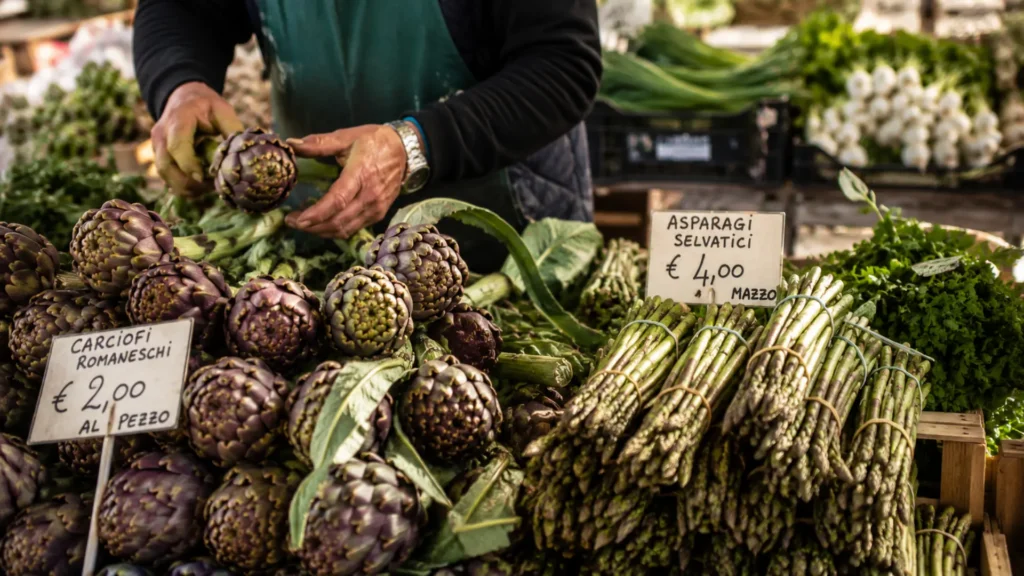
In April, Roman trattorias go heavy on carciofi alla romana, artichokes braised in olive oil, garlic, and mint. This dish tastes completely different when it’s in season versus trucked in from elsewhere in January. April is also when wild asparagus fills the markets in Emilia-Romagna. Walk through the Mercato di Mezzo in Bologna in April, and you’ll understand what seasonal eating actually means.
May brings strawberry season, fresh ricotta basically everywhere, and the kind of mild, breezy weather that makes standing over a hot stove in a cooking class feel entirely worth it.
Spring is particularly strong for:
- Cooking classes in Tuscany and Emilia Romagna featuring fresh seasonal produce including artichokes and asparagus
- Market tours in Bologna, Venice and Florence
- Wine tastings in Tuscany and Umbria before the summer crowds arrive
When to book spring: 3–4 months in advance. Popular cooking programs in Tuscany and Emilia Romagna fill by January for April–May dates.
Summer (June–August): Worth It, If You Plan Far Enough Ahead
Summer gets a bad reputation in culinary travel circles. Too hot. Too crowded. Too expensive. Some of that is true. But summer in Italy also means San Marzano tomatoes ripening near Naples, fresh seafood on the Amalfi Coast, and outdoor sagre, local food festivals, every weekend in every village. The real culinary draws of summer:
- Tomato season (July–August) in Campania and Sicily, these are the tomatoes pasta sauce was built for
- Zucchini flowers, peppers, and eggplant at their absolute peak
- Outdoor seafood markets along the Puglia and Calabria coastline
- Sagre: free, hyper-local, and often the most authentic food experience you’ll have in Italy
Here’s the problem nobody tells you: cooking classes and agritourismo bookings get genuinely scarce in summer. Well-known programs in Tuscany, especially around Siena, Montalcino, and the Chianti region, are fully booked by March for July and August. That’s not a rumor. It’s just the math of limited seats and very high demand.
When to book summer: At least 5–6 months in advance for any structured culinary experience. If you have a specific agritourismo or named cooking school in mind, move in January or February.
Fall (September–November): Italy’s Culinary Peak Season
No hedging here: fall is when Italy’s food scene hits its absolute peak. September kicks off vendemmia, grape harvest, across Tuscany, Umbria and Emilia Romagna. At quality, family-owned wineries, you can actually participate: picking grapes, pressing them, and eating lunch with the winemakers. It sounds cliché until you’re doing it, and then you get it.
October and November bring white truffle season to Umbria and Tuscany Apennines. The Sant’Agata Feltria truffle festival occurs in October and the season runs through the end of November. A shaved white truffle over fresh handmade tagliatelle .. that’s the meal. That’s the whole experience and what you’ll never forget. The rest of fall’s culinary calendar:
- Olive oil harvest (November) in Tuscany and Umbria, first cold press on bread, nothing else needed
- Porcini mushroom foraging (September–October) with guided walks in Umbria, Tuscany and Mt. Fumaiolo.
- Chestnut festivals in October across mountain villages in Tuscany and Emilia Romagna
Book accommodation and restaurant reservations 7–8 months out.
Winter (December–February): The Authentic Season Nobody Fights Over
Winter is when Italy gets real. Tourist volume drops, prices fall, and you’re suddenly eating in rooms where everyone around you is actually Italian.
Winter has a lot going for it that almost nobody talks about:
- Culinary and celebratory feasts in every region and Christmas markets make for great shopping of special foods and gifts to bring home
- Blood orange and citrus season in Sicily (January–February): the markets in winter are some of the most beautiful food scenes in Europe.
- Cooking class availability: January and February are when pasta classes in Emilia-Romagna actually have open seats at fair prices. Real instruction, amazing seasonal produce and small groups.
- December food culture: regional sweets, panettone variations, torrone. Spending a week in Modena or Bologna in December means eating in a way that’s very hard to replicate elsewhere.
When to book winter: 2–3 months ahead is usually enough. The exception: Bolzano’s Christmas markets in South Tyrol fill accommodation by September. That’s the one you move early on.
The Booking Strategy Most Culinary Travelers Get Wrong
How Far in Advance Should You Actually Book?
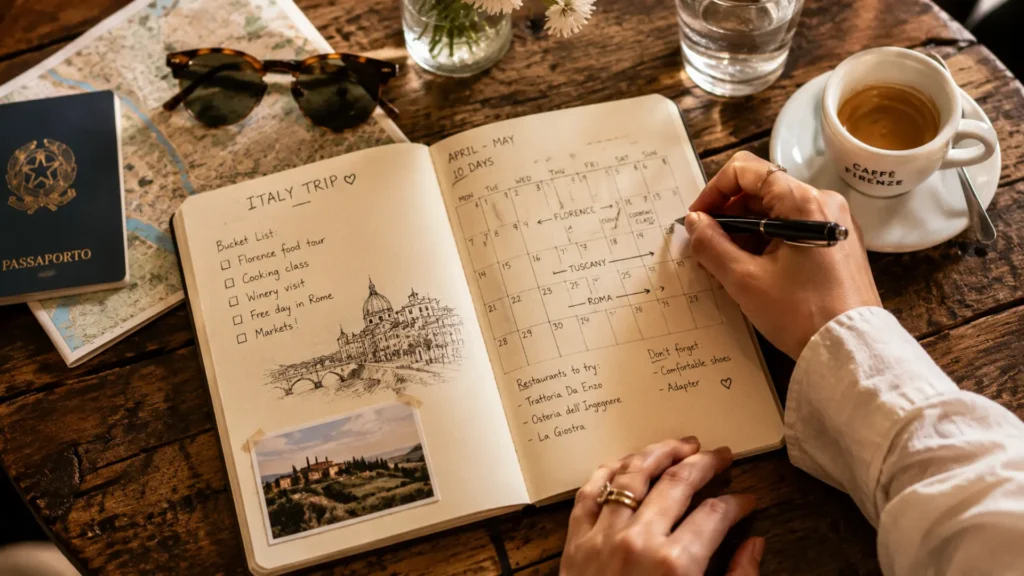
Most travelers book flights first, then figure out what to do. For a culinary vacation in Italy, that’s backwards. A cooking school with limited spaces doesn’t care when you bought your plane ticket. Here’s the order that actually works:
- Decide your season
- Research the specific culinary experiences you want (cooking class, winery, special festivals)
- Book those experiences first
- Then book flights and accommodation around them
Here’s the lead time framework that actually applies to culinary travel:
| Season | General Lead Time | For High-Demand Experiences |
|---|---|---|
| Fall (Sept–Nov) | 5–6 months | 7–8 months (truffle, vendemmia, olive oil tasting) |
| Summer (June–Aug) | 4–5 months | 6 months (Tuscany cooking schools, mushroom foraging) |
| Spring (Mar–May) | 3–4 months | 4–5 months (Easter week, popular programs) |
| Winter (Dec–Feb) | 2–3 months | 4–5 months (Bolzano Christmas markets) |
Which Italian Regions Fill Up Fastest?
Not all of Italy operates on the same timeline. The region you pick changes everything about how far ahead you need to move.
| Region | Demand Level | Booking Window |
|---|---|---|
| Tuscany | Fills fastest — demand outpaces supply | Book 5–6 months out minimum |
| Piedmont (Alba) | Fast in fall (truffle season), relaxed in spring | 7–8 months for Oct–Nov |
| Emilia-Romagna | Still underrated; trending upward | Book 3–4 months out |
| Umbria & Puglia | Most forgiving — best hidden value | 2–3 months often works |
Emilia-Romagna is worth highlighting specifically. Bologna, Modena, and Parma are arguably Italy’s most important culinary regions, the home of Parmigiano-Reggiano, prosciutto di Parma, traditional balsamic vinegar, and fresh egg pasta. And it’s still underbooked relative to Tuscany. That gap is closing, but it hasn’t closed yet.
Italy’s Best Food Festivals, and When to Book Around Them
Italy’s food festivals are worth planning your entire trip around. The challenge is that the best ones aren’t on major tourism platforms. They’re regional, deeply local, and logistically require you to be very organized about accommodation.
| Festival | Location | Timing | Book Accommodation |
|---|---|---|---|
| Sant’Agata Feltria Truffle Festival | Emilia Romagna | Oct | 7–8 months ahead |
| Vendemmia (grape harvest) | Tuscany, Umbria | Sept–Oct | April (contact the winery directly) |
| Sagra del Tartufo Nero | Norcia, Umbria | February | 2–3 months ahead |
| Taste of Florence | Florence, Tuscany | March | 2–3 months ahead |
The festivals themselves are often free or low-cost. It’s the accommodation and culinary experiences surrounding them, cooking classes, private winery visits, guided market tours, where you need to book early. That’s the part most travelers don’t plan for.
Choose The Best Time For Best Experience On Culinary Vacations
There’s no bad season for a culinary vacation in Italy. But there’s absolutely a wrong time to start planning, anything less than 3 months out for winter, or 6+ months out for fall and summer, and you’re working with leftovers.
Fall wins on sheer culinary density: truffle season, vendemmia, mushroom foraging, olive harvest. Spring wins on value, availability, and underrated ingredients. Winter wins for authenticity, the version of Italy that exists when you’re not in a crowd. Summer wins if you love energy and plan far enough ahead.
At Italy Culinary Vacations, we make sure to match your food priorities to the right season, then book the cooking classes and wineries before you book anything else. The experience is the anchor. Everything else follows.
Ready to build your Italian culinary itinerary?Plan with our culinary travel specialists , we’ll help you map the right season to the right experiences, and make sure you’re not scrambling for last-minute spots.